
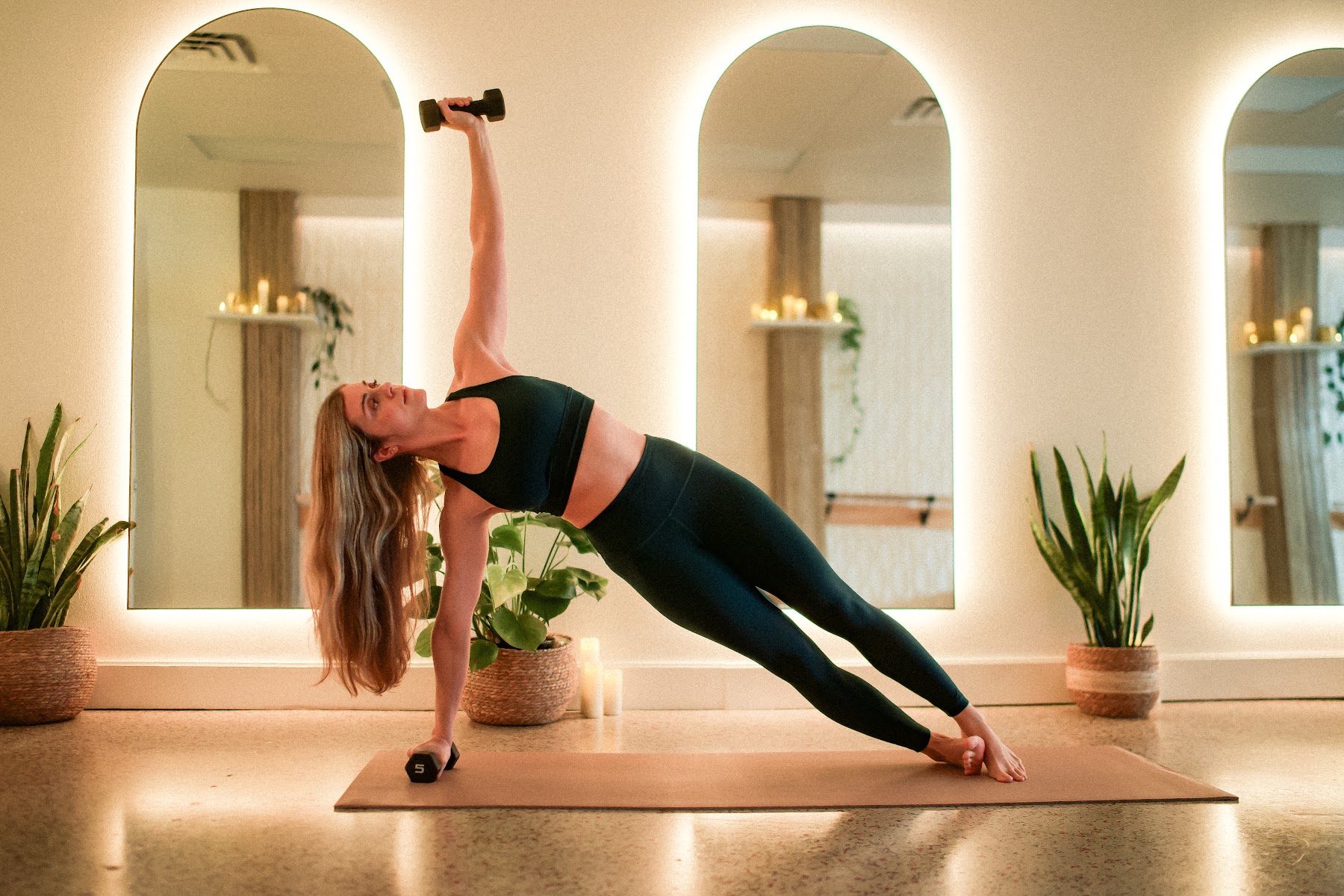
Yoga Sculpt can look simple from the outside: a mat, a pair of weights, good music, and a room moving together. Teaching it well asks for much more.
A thoughtful class has an arc. The breath supports the effort. Every strength block has a purpose. Transitions make sense. Music adds energy without rushing the room. Options help you stay connected to your body instead of chasing a shape at any cost.
That’s the work at the center of Lovelock's 50-hour Yoga Sculpt Teacher Training: learning how to lead a strong experience without losing clarity, safety, or intention.
More than adding weights to a flow
Yoga Sculpt brings yoga-informed movement together with functional strength, cardio, and music. The format can build endurance and confidence, but only when the programming respects how bodies actually move under load.
During the training, you’ll study why a sequence works—not only memorize one. You’ll learn to choose movements with purpose, organize effort across a full class, cue weight-bearing positions clearly, and offer progressions or modifications without interrupting the experience.
What the 50 hours cover
- Yoga Sculpt methodology, class structure, and purposeful sequencing
- Functional anatomy and safer strength-training principles
- Breath-centered cueing for movement, weights, and transitions
- Strength and cardio programming across a complete class arc
- Musicality, BPM, playlist building, and using music as support
- Modifications, progressions, and ways to serve a mixed-level room
- Leadership, teaching presence, and communication that feels clear and human
The aim isn’t to create identical instructors. Nicole, Marina, and Ari bring different backgrounds and teaching voices to the room so you can learn the foundations, practice the craft, and develop a style that still feels like your own.
Who this training is for
You don’t have to fit one professional label to belong here. The program is built for current yoga teachers who want to add a strength-based format, fitness professionals who want a more breath-centered approach, and dedicated students who are ready to understand the method from the inside.
You should be willing to practice, receive feedback, and teach aloud. Confidence isn’t a prerequisite. Curiosity, consistency, and a willingness to keep learning matter more.
Practice turns information into teaching
The training includes all scheduled sessions, five observation hours, the creation of an original sequence and playlist, and a final teaching assessment. Those pieces matter because teaching can’t be learned from notes alone. You need time to observe, build, speak, adjust, and try again.
By the final weekend, the goal isn’t perfection. It’s a stronger understanding of why you’re choosing each movement, how to communicate it, and how to stay present enough to support the people in front of you.
A strong room begins with a thoughtful teacher
People remember the class that made them feel capable. They remember the teacher who gave them a useful option without making them feel singled out. They remember music that helped them move and a closing moment that let the effort settle.
If you’re ready to develop that kind of leadership, the fall cohort gives you fifty focused hours to study the method, practice the craft, and begin teaching from a more grounded place.